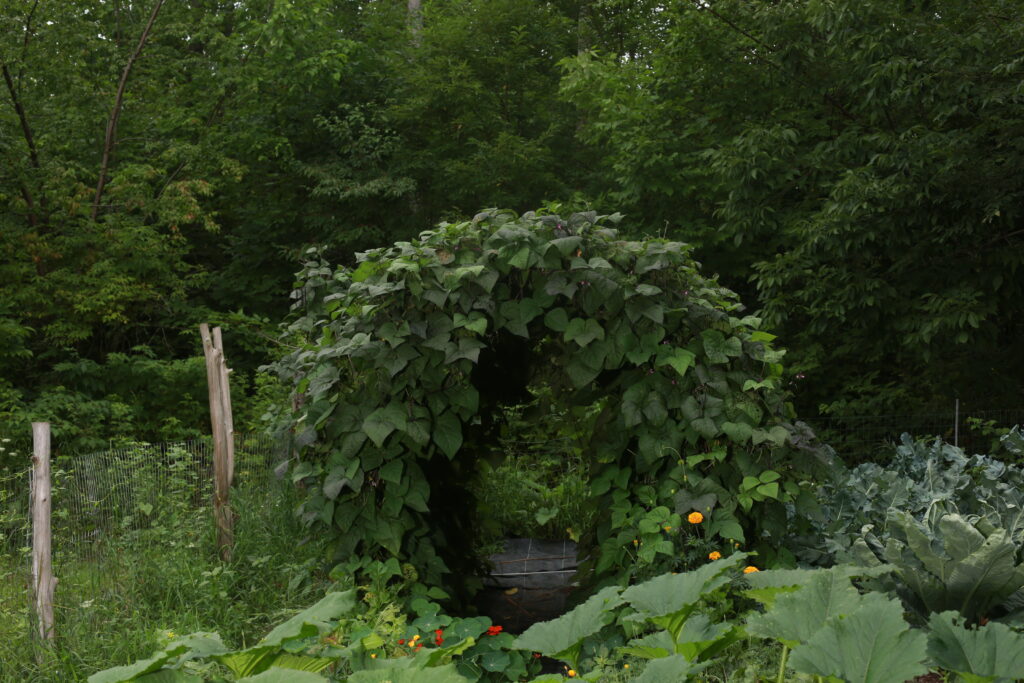
How to Start Homesteading
You Don’t Have to Grow Up This Way to Learn It
We didn’t grow up knowing how to raise animals, preserve a harvest, grow most of our food or run a homestead.
We learned it one garden, one animal, one mistake and one useful skill at a time.
You can too.

- How to Start Homesteading
- You Don’t Have to Grow Up This Way to Learn It
- Grow Your Own Food
- Cook From Scratch
- Preserve the Harvest
- Learn Everyday Herbs
- Build Bread Independence
- Put Money in the Bank
- Trimming the Societal Corners
- Purposefully Making Life “Harder”
- Less Dependence on Society, More Confidence at Home
- Staying Home Is Not Falling Behind
- Resisting Outside Influence
- A Life Rooted, Not Rushed
We’re Accidental Homesteaders
It’s not like you wake up one morning growing most of your family’s food.
It’s more of a vortex.
You plant a few tomatoes.
Then you add a garden.
Then come the chickens.
Then meat birds, pigs, sheep, fruit trees, herbs, pressure canners, sourdough and more gardens than you originally planned.
Somewhere along the way, you look around and realize this has become your life.
More than 24 years ago, I started with one small garden box and a handful of tomato plants. I didn’t grow up knowing how to do all of this.
Honestly, if you had met me back then, you probably never would have guessed I would become a homesteader.
Today, Justin and I live with our three children on our Northern Michigan homestead, where we grow and raise most of our own food.
We’ve learned through trial, error, successes, complete failures and a whole lot of figuring things out as we go.
That is homesteading.

We Didn’t Grow Up This Way
Homesteading was never about creating a picture-perfect life.
It started with food.
We wanted to know where our food came from, how it was raised and what went into it.
We wanted our children to understand the work behind the food on their plates.
We wanted to build useful skills, become less dependent on the grocery store and create a legacy of faith, family and food.
In this video, I share how we started—and how a few small choices eventually turned into the life we live today.
Start Where You Are
You do not need five acres.
You do not need a barn filled with animals.
You do not need a giant garden, a pressure canner and three years’ worth of food stored in the basement.
You certainly do not need to know everything before you begin.
Homesteading begins when you decide to learn a useful skill and take more responsibility for something your family needs.
Start with the space, time and resources you have right now.
Pick one useful skill. Learn it well. Then add another.
That is how a few tomato plants eventually become a homestead.
How to Start Homesteading
So where do you actually begin?
You can begin in the garden.
You can begin in the kitchen.
You can make bread, plant a few vegetables, learn one herb, preserve one jar of food or replace something you normally buy with something you made yourself.
In this full-length video, I walk you through how to start homesteading with the space, time, money and experience you have right now.
You don’t need to do everything.
You simply need to start somewhere.
Choose Your Starting Place
Homesteading looks different for every family.
Choose the area that interests you most and start building one practical skill at a time.
Grow Your Own Food
Whether you’re planting your first tomato or trying to grow enough food to fill your pantry, you’ll find practical gardening help based on more than 24 years of real-life experience.
This is gardening with real weather, weeds, pests, mistakes and short Northern growing seasons.
Cook From Scratch
Homesteading starts in the kitchen.
Learn how to turn simple ingredients, homegrown food and what you already have on hand into real meals for your family.
No perfection required.
Preserve the Harvest
When God provides, you preserve.
Learn how to use canning, freezing, fermenting, dehydrating and other practical methods to make your harvest last beyond the growing season.
Learn Everyday Herbs
Herbs don’t have to be complicated.
Learn one plant. Grow it, identify it and discover practical ways to use it in your home.
Some of the first useful herbs you learn may be the plants you’ve been calling weeds.
Build Bread Independence
Sourdough isn’t supposed to make your life revolve around bread.
Learn how to keep a starter, bake everyday bread and use sourdough in ways that fit your real life.
Put Money in the Bank
Every useful skill you learn is something you can use again and again.
Grow garlic and save cloves for next year.
Save your own seeds.
Grow potatoes and make your own fries.
Learn how to use the herbs growing around you.
Make something instead of automatically buying it.
That’s money in the bank, y’all.
Homesteading Is Also a Mindset
Homesteading isn’t only about gardens, animals and jars of food on the shelves.
It’s also about intentionally trimming the societal corners from our lives.
It means looking at the things we automatically buy, outsource or depend upon and asking:
Could I learn how to do this?
Could I make it?
Could I grow it?
Could I stay home instead of constantly running?
Could I choose a slower, more rooted life—even when society tells me I’m falling behind?
These videos explore the mindset behind the practical skills.
You do not have to watch them all at once. Choose the one that speaks to where you are right now.
Trimming the Societal Corners
What could change if we intentionally trimmed away some of the noise and made more room for faith, family, food and useful work?
Purposefully Making Life “Harder”
Growing food takes longer than buying it.
Making bread takes longer than pulling a loaf from the shelf.
Preserving the harvest takes longer than opening a package.
But harder does not always mean worse.
Sometimes the work gives us better food, stronger skills and a deeper appreciation for what we have.
Less Dependence on Society, More Confidence at Home
Every useful skill you learn gives you another option.
You know how to make it, grow it, preserve it or figure it out yourself.
The goal isn’t to become completely independent of everyone and everything.
It’s to become less helpless and more confident at home.
Staying Home Is Not Falling Behind
Society constantly tells us we should be going somewhere, buying something or doing more.
But staying home to cook, garden, teach our children, care for animals and build a life together is not falling behind.
There is important work happening at home.
Resisting Outside Influence
It is easy to compare your beginning to someone else’s twenty-fourth year.
You see the big garden, full pantry, animals and homemade meals—but you don’t see all the years, mistakes and small decisions that built them.
Your homestead does not need to look like mine.
Start where you are and build the life God is calling your family to build.
A Life Rooted, Not Rushed
A rooted life is built slowly.
One garden.
One recipe.
One animal.
One season.
One useful skill at a time.
You don’t need to rush to prove that you’re a “real” homesteader.
Put down roots. Learn as you go. Let your life grow from there.
What Homesteading Really Looks Like
It isn’t always beautiful baskets of vegetables and bread cooling peacefully on the counter.
Sometimes the garden is complete chaos.
Sometimes the sheep house flips over in a storm.
Sometimes the pigs make decisions without consulting you and suddenly you have piglets named Pizza Roll and Pączki.
Sometimes you plant enough for two years because you know the weather, pests and harvest will never go exactly according to plan.
We fail.
We adjust.
We learn.
Then we get back up and do it again.
That is real homesteading—and you are allowed to begin before you feel completely ready.
Follow the Full Seed-to-Plate Journey
Growing food is only the beginning.
You also need to know when to harvest it, how to preserve it and how to turn it into meals your family will actually eat.
That is why I wrote Seed to Plate: A Homesteading Gardening Guide & Cookbook.
It brings the entire process together—from planting the first seed to putting real food on the table.
Keep Learning Inside the Food Prood Academy
If you want more guidance as you build these skills, come join me inside the Food Prood Academy.
This is where I teach practical homesteading lessons, share printable resources and help you take the next step without trying to learn everything at once.
You Can Learn This
You do not have to grow up this way.
You do not need to have everything figured out.
You simply need to begin.
Plant something.
Cook something from scratch.
Learn an herb.
Preserve one jar.
Build one useful skill—and then another.
Become a producer, not just a consumer.
You can do this.
.