
Vertical Gardening Basics: Practical Growing for Small Spaces

Vertical gardening is one of the simplest ways to grow more food without needing more land. By growing upward instead of outward, you can increase your harvest, improve air flow, reduce disease, and make better use of the space you already have.
Whether you’re gardening in a small backyard, raised beds, along a fence line, or even on a porch, vertical gardening allows you to grow abundantly while keeping your garden organized and easy to maintain. This method has been used for generations — long before sprawling garden plots were common — and it remains one of the most practical tools for today’s home gardener.
Why Vertical Gardening Works
Vertical gardening isn’t just about saving space — it also supports healthier plants and more efficient harvesting.
Benefits include:
More growing space without expanding your garden footprint
Better air circulation, which can reduce fungal issues
Cleaner produce with less soil splash
Easier harvesting and maintenance
Improved sunlight exposure
Fewer pest problems near the ground
For many gardeners, vertical growing becomes essential once they experience the difference it makes.
Best Plants for Vertical Gardening
Many common garden crops thrive when grown vertically, especially vining or climbing varieties.
Great choices include:
Tomatoes
Cucumbers
Pole beans
Peas
Choosing strong supports and training plants early helps them grow naturally and reduces stress later in the season.
Vertical Gardening Methods
There’s no one-size-fits-all approach — vertical gardening can be as simple or as structured as you want.
Common methods include:
Trellises and cattle panels
Arches and garden tunnels
Fencing and wire panels
Teepees
- Repurposed materials (ladders, pallets, gates)
The best system is one that fits your space, your crops, and your daily routine.
A Practical Approach
Vertical gardening works best when planned early in the season. Installing supports before planting helps prevent root disturbance later and allows plants to grow naturally upward from the start.
Focus on sturdy materials, secure anchoring, and realistic plant spacing. A well-supported plant will reward you with stronger growth and easier harvests throughout the season.
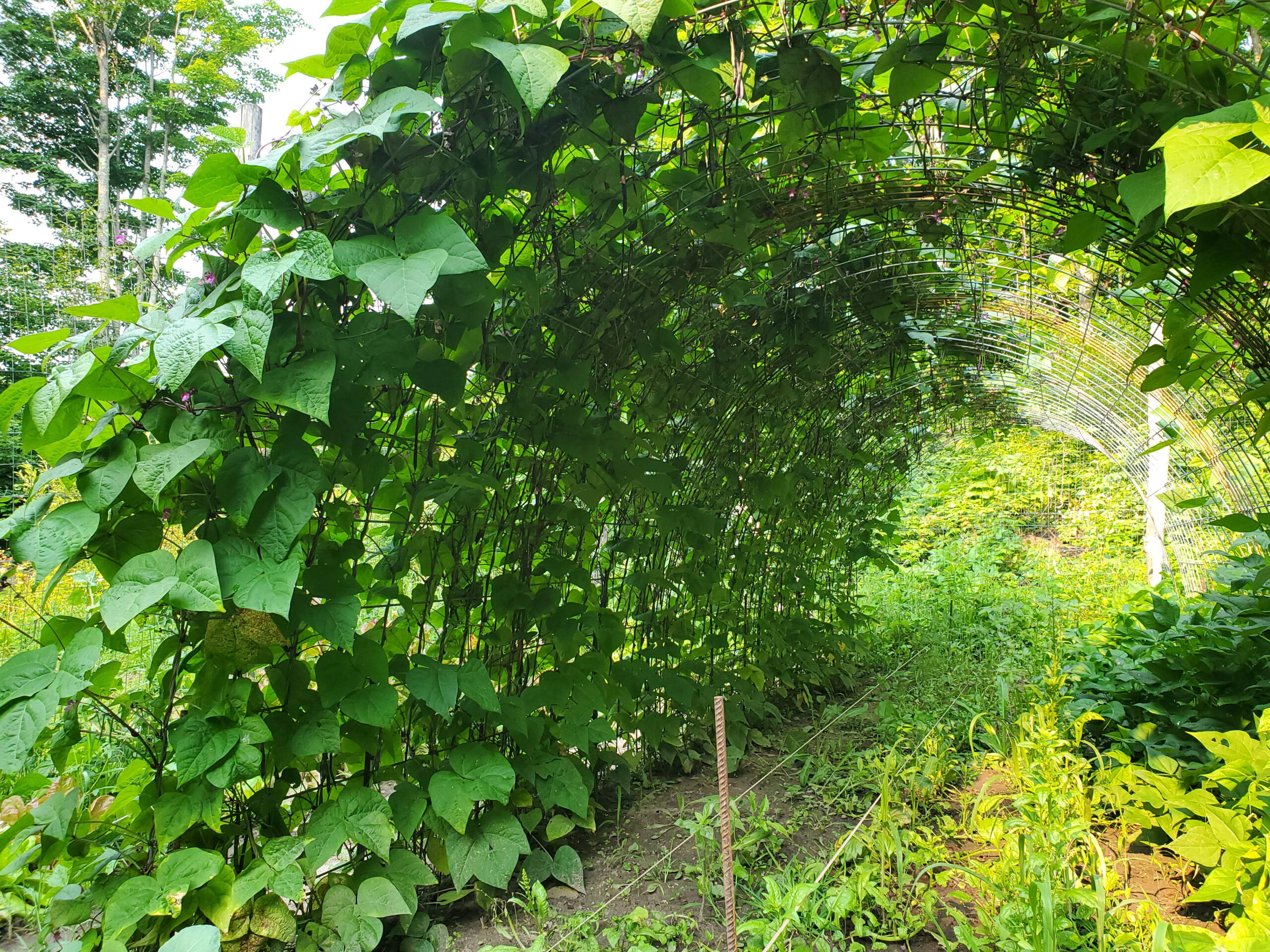
Hog Panels & rebar
These hog panels are bent over in a dome shape and held in place by 3 foot rebar sections that are placed into the ground. Two on the outside and 1 on the inside. The space in between the dome is approx. 5 feet. Plant beans on each side of the hog panels (inside & out) You could also use cattle panels, however the spacing in between in much larger, I prefer the hog panels. Great for Pole Beans and Cucumbers
Watch the above video to show you exactly how I set up our bean trellis which you could use for any climbing type plants such as pole beans, cucumbers, and such.
TIP: use what you have on hand in order to maximize space in the garden.
Pallets + Poles or Rebar
Pallets are a great frugal way to create vertical spacing especially for items that do not need 8 feet to grow such as the pole beans. Great for Peas & Cucumbers.
We grab the poles and rebar from Home Depot and cut them into half or thirds depending on what you need. You may even ask them to cut them for you.
Pallets you can usually find around towns for free or you can stop and ask companies who have some in the back and see if they are giving them away.
Hog panels we purchase from tractor supply, family farm & home or the like. I absolutely LOVE the size of hog panels compared to cattle panels and I use them for my tomatoes, cucumbers and pole beans.


Ultimate Garden Bundle (If your interested in the bundle click HERE and use coupon code “kitchenrevival” for $50 off!
Day #2 Top Gardening Tips to Start Today
Day #5 Garden Planning
Day #6 Learn to Grow Anywhere
Day #7 Top Tools to Have on Hand
Day #8 Learn about Good pests in your garden