

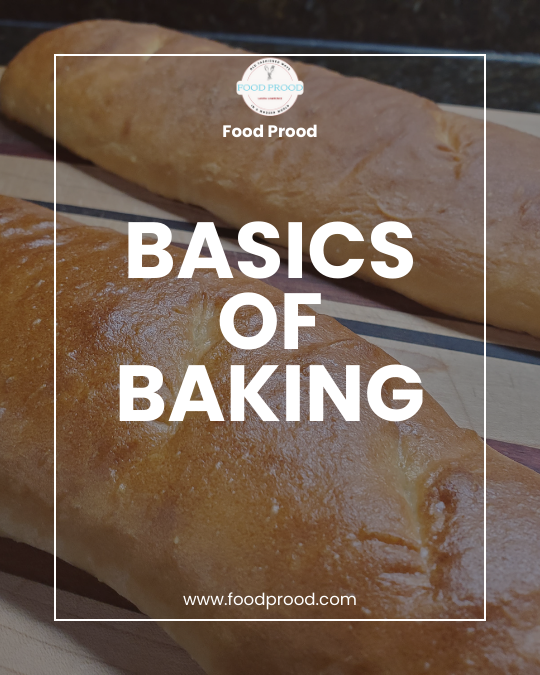

The Basics of Baking: Understanding the Why Behind the Ingredients
Baking can often be confusing and technical. But when you understand why ingredients behave the way they do, baking becomes less intimidating and fun!
Whether you’re baking bread for your family or learning to rely less on store shelves, these basics matter.
Let’s break down some of the most common (and most misunderstood) baking elements.
Why Salt Matters in Bread Dough
Salt does far more than add flavor to bread.
First, salt strengthens gluten. When flour and water mix, gluten forms a stretchy network that traps gas and gives bread its structure. Salt tightens and stabilizes this network, helping dough hold its shape rather than spreading or collapsing.
Second, salt controls yeast activity. Yeast feeds on sugars in the dough and produces carbon dioxide. Without salt, yeast works too quickly, causing dough to over-proof and develop weak structure and flat flavor.
Finally, salt enhances flavor. Bread made without salt tastes dull and unfinished, even if everything else is done correctly.
In short: salt balances fermentation, strengthens dough, and makes bread taste like bread.
Milk vs. Water in Bread Dough
Both liquids hydrate flour, but they produce different results.
Water-Based Doughs
Using water creates:
- A crispier crust
- A chewier crumb
- A more pronounced wheat flavor
This is why traditional artisan and rustic breads rely on water.
Milk-Based Doughs
Milk adds:
- Tenderness from milk fats
- Softness in the crumb
- Richer flavor
- Better browning due to milk sugars (lactose)
Milk is commonly used in sandwich breads, rolls, and enriched doughs where softness matters more than crust.
Think water for structure and chew, milk for softness and comfort.
Baking Soda vs. Baking Powder
These two leaveners are often confused, but they are not interchangeable.
Baking Soda
Baking soda is pure sodium bicarbonate. It requires an acid (like buttermilk, yogurt, vinegar, or molasses) to activate. When combined with acid and heat, it produces carbon dioxide gas immediately.
Best for:
- Quick breads
- Muffins
- Recipes with acidic ingredients
If used without enough acid, baked goods can taste bitter or metallic.
Baking Powder
Baking powder contains:
- Baking soda
- An acid
- A stabilizer (usually cornstarch)
Most modern baking powder is double-acting, meaning it releases gas twice: once when mixed with liquid and again when heated.
Best for:
- Cakes
- Biscuits
- Recipes without strong acidic ingredients
Baking soda needs acid you provide. Baking powder brings its own.
What Is Proofing?
Proper proofing:
- Improves texture
- Develops flavor
- Creates a lighter crumb
Under-proofed dough will be dense and tight.
Over-proofed dough can collapse and bake flat.
A simple test: gently press the dough with a finger.
- If it springs back quickly → needs more time
- If it fills in slowly → ready to bake
- If it doesn’t spring back → over-proofed
Proofing Yeast: Knowing It’s Alive
Proofing is the stage where dough is allowed to rest and rise before baking. During proofing, yeast ferments sugars in the dough and releases carbon dioxide, which inflates the gluten structure.
To proof yeast:
- Warm water to about 110°F (warm, not hot)
- Add yeast and a small amount of sugar
- Let sit for 5–10 minutes
If the mixture becomes foamy and bubbly, the yeast is alive and ready to work. If nothing happens, the yeast is likely dead and should be replaced.
This step is especially useful when:
- Using older yeast
- Baking in colder kitchens
- Making important or large batches of dough
Baking Is Practice, Not Perfection
Baking rewards attention, patience, and repetition. These basics form the backbone of nearly every loaf, roll, and quick bread you’ll make. Once you understand them, recipes stop feeling rigid and start feeling adaptable.
That’s when baking becomes a skill you own, not just instructions you follow.
Sources & References
The information in this article is drawn from well-established baking and food science resources, including:
- Harold McGee, On Food and Cooking: The Science and Lore of the Kitchen
- Peter Reinhart, The Bread Baker’s Apprentice
- King Arthur Baking Company, Baking Education Resources
- America’s Test Kitchen, Baking Science Guides
- *USDA Food Science & Nutrition Educational Materials
Baking is one small part of a bigger picture — one where food is grown, prepared, and shared with purpose. If you’re working toward a more grounded, intentional way of living, explore the resources here, join the community, and keep building skills that serve your home well.
Join my Cooking Club and save 50% off with code “ERA50“


